Overview of Small Cabin Building Materials
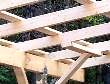 There is a wealth of information available on building materials on the 'Net, at your local library, and from other available sources. I do not intend to have a cabin building material encyclopedia here.
Rather, this page is a collection of the key points relevant to the selection of the building materials I used in the construction of my small cabin.
Spruce Lumber
Spruce is the most commonly used construction lumber and is also the most suitable for your small cabin frame construction.It is inexpensive in comparison to other wood products, easy to work with, and readily available from building material suppliers and lumber yards.
The length of a piece of lumber, on the other hand, actually reflects the correct sizess, i.e., 8 ft is really 8 ft.
Pressure Treated Wood
You will need to use Pressure Treated (PT) Wood (Timber/Lumber) in cases where the wooden parts of the cabin structure come in contact with the ground, or are in close proximity to the ground.Regular (non-pressure-treated) wood will rot over time. See a separate page for more information on Pressure Treated Wood.
Concrete Deck Blocks
 I used pre-fabricated concrete "4-Way Dek-Blocks" for my small cabin floor frame support.
The design accepts 2"x4", 2"x6" and 2"x8" lumber for stringers, and 4"x4" posts.
Small Cabin Building Materials Breakdown
Floor
- 2"x6" or 2"x8" Pressure Treated (PT) lumber frame
- 5/8" or 3/4" 4x8 ft sheets of Pressure Treated (PT) plywood
Walls
- Frame: 2"x4" spruce lumber
- Siding: 3/8" or 1/2" thick sheets of plywood (4x8 ft), or (my preference) 3/8" 4x8 ft SmartSide Panels
- Moisture-repellent fabric (Typar, etc.), polyethylene film
Roofing
- 2"x4" spruce lumber (frame)
- 3/8" 4x8 ft plywood or OSB sheets
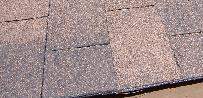
- Asphalt shingles
Doors and Windows
It is easier to use pre-made doors and windows. I used second-hand doors and windows obtained for free from a local renovation company.Posts
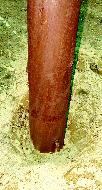 You may choose to use posts as a cabin foundation option (in case of sloping ground), or for the support of the roof in some structures (i.e., gazebo, veranda).
Since posts come in contact with the ground, they must be decay-resistant. Here are some options and points of consideration:
- Pressure-treated (PT) 4"x4" or 6"x6" posts
- Cedar (pre-made posts or debarked tree trunks)
- Cedar has a natural chemical which makes it decay-resistant. Therefore, it needs no additional treatment.
- If you use tree trunks, you do need to skin/debark them before placing them into the ground. Debarking cedar is fairly easy. The bark peals off once you "catch" it with an axe or heavy duty knife.
Tip:
Cedar is a good option if you have cedar trees growing on your property. This was my choice for posts in many cases. Look for them when clearing your site.
Paint
- You can use outdoor latex paint for painting SmartSide Panels (they are already primed).
- For other wooden surfaces your better choice is an oil paint or stain - it protects better from wear and exposure to moist weather conditions.
Nails
The most commonly used nail size for framing is 16d. See translation table of common nail sizes. Other nail points:- When nailing lumber, spiral nails are much better than regular nails. They provide about 30% stronger hold.
- For outdoor nailing, use galvanized nails They are only marginally more expensive, but will not rust.
| << Building Small Cabin Intro | Small Cabin HOME | Small Cabin Building Tools >> |