|
| Author |
Message |
CamaroMan
Member
|
# Posted: 19 Nov 2025 10:37am
Reply
Hi all - planing our roof for the cabin - i have very heavy duty metal roof sheets that you can just about walk on - and id like to install them with an air gap as they emit heat - the old 70s land rovers actually had an optional 2nd roof for this reason.
How could I do this above the underlayment as I cannot have joists OVER the underlayment.
This is a lean to roof so very straight forward. Possibly space the roof sheets off the structure? and can I put radiant osb underneath the underlayment with shiny side up?
|
|
Grizzlyman
Member
|
# Posted: 19 Nov 2025 08:28pm
Reply
Why can’t you have purlins above the underlayment?
|
|
darz5150
Member
|
# Posted: 19 Nov 2025 11:31pm
Reply
Quoting: Grizzlyman Why can’t you have purlins above the underlayment?
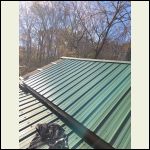
We did this on my cabin over an existing shingled roof.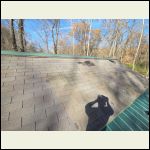
IMG_20251116_145647..jpg
| 
IMG_20251116_145655..jpg
|  | |
|
|
CamaroMan
Member
|
# Posted: 20 Nov 2025 10:47am
Reply
its a lean to style roof- so i checked if i could put joists above the underlayment and ai said not to-
some snow fall here and there but not for more than a day- once in a very blue moon snow will sit for 1-2 weeks- maybe twice every 3-5 years. Not sure if that plays a role-
Its the summer heat (radiant) im trying to bleed off during the day -
Ill see what it looks like when im there-
|
|
Brettny
Member
|
# Posted: 20 Nov 2025 11:12am
Reply
Perlins arnt joists. Joists in a roof are structual so wouldnt want them above the underlayment also. Perlins how ever are typicaly 1x4 layed flat just to hold the metal roofing. Then you would put underlayment over perlins.
|
|
Grizzlyman
Member
|
# Posted: 20 Nov 2025 04:20pm - Edited by: Grizzlyman
Reply
I built a square purlin system above my underlayment. Vertical (from ridge to edge) first to create vent channels and then horizontal on top of that to attach the steel roofing. This leaves a gap under the steel so air can flow and vent
|
|
gcrank1
Moderator
|
# Posted: 20 Nov 2025 08:22pm
Reply
AI aint the sharpest knife in the drawer.....(yet)
G-man's system is Great
|
|
CamaroMan
Member
|
# Posted: 21 Nov 2025 11:41am
Reply
Hey grizzly thanks for that- assuming moisture "could" get under there -
how would you attach them thru the underlayment? cap screws with 100% waterproof silicone? Fascia board would prob prevent splatter etc getting in-
|
|
|
Grizzlyman
Member
|
# Posted: 21 Nov 2025 01:32pm - Edited by: Grizzlyman
Reply
I did mine different. I put down underlayment, then insulation, then purlins. Doesn’t sound like you’ll have the insulation on TOP of the roof like I did. I did this to preserve the cathedral ceiling below. It’s not terrible insulation, but not the best. The r value is fairly low for roof insulation. (2 1/2 inches of foam)
I’m not sure how water would get in. You’re correct in that the fascia prevents this.
Think about industrial building/ pole barns. They are built in this method- purlins then steel. Fascia keeps out any blowing liquid.
The underlayment is a backup. No need to waterprooof each screw on the underlayment.
Every house shingled with tarpaper underneath has hundred of staples that hold the tarpaper on and about a billion nails driven through the shingle and then the tarpaper.
To attach the purlins, I used 6” structural screws driven into the joists from above. I needed a long screw because of the foam. In your case you could just use any screw long enough to catch the joist. I have joists spaced at 2’ so the vertical purlins are on top of the joists every 2 ft. I used 1x4s to keep the profile low and give me 4” of wiggle room to catch the joist from above.
|
|
CamaroMan
Member
|
# Posted: 21 Nov 2025 02:31pm
Reply
sounds good- yeah the underlayment is more of a backup in case a roof sheet develops a drip or something- id rather put a drop of silicone under anything going thru there - wont hurt anything cheap backup.
|
|
CamaroMan
Member
|
# Posted: 21 Nov 2025 03:04pm
Reply
Ordering lumber - whats a suitable flooring option? radiant OSB or plywood? I do have radiant barrier for the bottom- 16 OC joists..
Thought i could double up the radiant barrier with the coated OSB- but plywood also an option. I am closing up the crawl space for draft etc-
|
|
Fanman
Member
|
# Posted: 21 Nov 2025 06:54pm
Reply
On our metal roof we nailed 1x2 purlins on top of the existing shingles, then screwed the roof down with the screws all going through the purlins. The ribs in the metal provide an air passage from bottom to top. But it's a cold attic so the insulation is on the ceiling below. In one new section where there were no existing shingles, red rosin paper on the plywood roof decking, and the purlins nailed through that.
|
|
Aklogcabin
Member
|
# Posted: 23 Nov 2025 08:49am
Reply
I kinda like to use plywood for everything. For floor I use TnG because it is more ridgid and seals leaks better. Mostly because it gets wet from snow n such. And plywood lasts better and is much easier to paint.
For what it's worth. I like having the plywood on the roof because I feel it's more solid. Mostly because of when it's raining out. It can get a bit noisy without it. For roof I'd install the roof joists and sheet it with half inch cdx plywood. I've used the osb before and seems OK. But I feel that the holding power of the plywood is being holding the roofing screws.
Basically sheet over the joints n then the roofing material then metal. Air will flow up the ribs in the metal removing any moisture but should stay dry.
Good luck with the cabin. I know designing ours was very thoughtful.
|
|
DRP
Member
|
# Posted: 23 Nov 2025 09:32am - Edited by: DRP
Reply
We're getting closer. All I was seeing is creative bat condominiums and dew point condensation problems.
On a residence, we apply a solid deck, you'll find the manufacturers call for a minimum of 5/8 ply or osb and yes ply has better withdrawal numbers. Then seal the metal to the prepped deck with closure foam strips from the manufacturer. You do not want damp air, bugs and bats moving in those ribs. The vapor drive when the sun is shining is down to the vent space under the sheathing, that is how it can dry.
https://www.youtube.com/watch?v=RFHdL-5sviY&t=3s
|
|
|

