|
| Author |
Message |
DRP
Member
|
# Posted: 16 Dec 2025 03:20pm
Reply
If you are within range at the time these are always excellent classes;
https://cpe.vt.edu/woodcon/courses.html
|
|
DRP
Member
|
# Posted: 16 Dec 2025 03:24pm
Reply
More from today's mail, some neat design ideas;
https://www.thinkwood.com/blog/the-epitome-of-cozy-7-wood-forward-cabins-elevating-th e-traditional-rustic-getaway
|
|
DRP
Member
|
# Posted: 29 Dec 2025 05:28pm
Reply
a Post Frame Diaphragm Design webinar;
https://associationdatabase.com/aws/NFBA/ebulletin/view_mail/281505/2223844?
|
|
DRP
Member
|
# Posted: 19 Jan 2026 03:58pm
Reply
Hit the online university tab on the NFBA website for details.
Tuesday, January 20th, 2026 2:00 pm CST / 3:00 pm EST
Simplified Method for Shallow Post and Pier Foundation Design Details
Learning Objectives:
Design shallow post/pier foundations to resist bearing and uplift loads
Determine when the Simplified method may be used for shallow post/pier foundation design
Determine ground line shear and moment in shallow post/pier foundation systems using the simplified method
Determine design embedment depths for shallow post/pier foundation systems using the simplified design method
|
|
gcrank1
Moderator
|
# Posted: 19 Jan 2026 04:11pm
Reply
Im glad you are here to be one of our knowledgeable resources because just reading that made my head hurt 
|
|
DRP
Member
|
# Posted: 19 Jan 2026 05:16pm
Reply
Oh I prefer the easy way 
I posted a link to the video about this a week or two ago. This is how to design this type of foundation "according to accepted engineering practice" to use the phrase.
I followed the link in the video to the page for the Design Aid here;
https://www.nfba.org/aws/NFBA/pt/sp/tech-resources
I made entries into the software till I got over my head... The above popped into my email this afternoon, it looks like the answers to those questions. I'll be trimming windows when the presentation happens tomorrow but I see the powerpoint and pdf are already posted. Hopefully I'm leaving breadcrumbs for those who would like to do this without just guessing.
|
|
jsahara24
Member
|
# Posted: 19 Jan 2026 08:06pm
Reply
Quoting: DRP Hopefully I'm leaving breadcrumbs for those who would like to do this without just guessing.
You definitely are..Thx
|
|
DRP
Member
|
# Posted: 30 Jan 2026 07:21pm - Edited by: DRP
Reply
I've been reading, played with other pier calculators.
This set of spreadsheets does pole calcs. They are simpler but not the "approved" set of equations, they helped with my understanding of the NFBA spreadsheet workbook from above.
https://www.cesdb.com/polefdn.html
As did this article;
https://nfba.org/aws/NFBA/asset_manager/get_file/791809?ver=0
I then envisioned a modest 8 pier building, 3' from ground to girders, applied a 20 lb per square foot wind to the widest sail. I divided that horizontal force on the building by the 8 piers to get a 1500 lb groundline shear, one of the inputs. The point of action of the 1500 lb force is at the connection of floor diaphragm to pier. That 1500 lbs lateral on the pier is 3' above the groundline.. 1500x3=4500 ft-lbs rotational moment at the groundline (for this part of the structural analog) The spreadsheet wants that in inch-pounds.. 4500x12=54000 in-lbs.
I input 12" sonotubes. The first is in a large, oversized hole backfilled with gravel or in a cohesionless, sandy/gravelly soil. Minimum depth of embedment 64". The 2nd shot is in a sandy clay, minimum depth passes the calc at 42" deep but the calc is assuming embedment a minimum of 4x pier width of 12", so minimum in a good non plastic clay is 48" for that example.
Hopefully the inputs show (yellow boxes) in the pics and you can see how they change as you go from cohesionless (sand/gravel) to cohesive (clay) soils. I stick to the ASD inputs.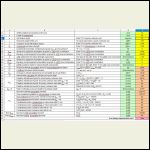
SonoGravel.jpg
| 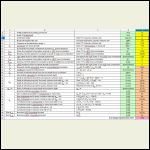
SonoClay.jpg
|  | |
|
|
|
DRP
Member
|
# Posted: 7 Mar 2026 08:11pm
Reply
This is a tech note from the code folks on moisture management in walls;
https://www.iccsafe.org/wp-content/uploads/proclamations/TN06-Vapor-Retarders_pdf.pdf
A good related article,
https://buildingscience.com/documents/digests/bsd-106-understanding-vapor-barriers
This is the spec sheet for one, pretty widely available, smart vapor retarder,
https://certainteed.widen.net/content/wfhcy2tiaf/pdf/MemBrain-Specifications-Sheet-30 -28-080-e-us.pdf?u=nwk4fd
|
|
|

