| << . 1 . 2 . 3 . >> |
| Author |
Message |
gcrank1
Moderator
|
# Posted: 20 Dec 2025 10:03am
Reply
Ive recently rediscovered the 'farm' generators that mount on a tractor's 3pt hitch and are driven off the PTO. I like the idea of the portability and not needing to maintain/service another engine. Sadly for me, my little JD 1025r at ~25HP seems to be too small, but maybe that is because the needed drive power is when the gen is kicking out max watts? (iirc the min drive HP Ive seen is about 30?) Ive never been around one so idk. Ive seen some on Craigslist and FB Marketplace when Ive gone looking for small tractor attachments/implements.
|
|
paulz
Member
|
# Posted: 23 Dec 2025 10:25am
Reply
Back at the house waiting out a storm. In the mean time a local pal, retired elevator mechanic, has lots of 220v cable and wire so it looks like the plan is to leave my 220v well pump in place and cable up to the cabin genny.
Being a lifelong DC vehicle guy I have only very basic AC knowledge, no 220. Two 110s in split phase? And the myriad of plug styles..
|
|
gcrank1
Moderator
|
# Posted: 23 Dec 2025 10:33am
Reply
If you dont hardwire use a plug style that locks in place
|
|
paulz
Member
|
# Posted: 23 Dec 2025 11:09am
Reply
Yeah that’s what both gens and the pump has. So four prongs, two 110s a neutral and a ground?
|
|
travellerw
Member
|
# Posted: 24 Dec 2025 01:36pm - Edited by: travellerw
Reply
Quoting: paulz Yeah that’s what both gens and the pump has. So four prongs, two 110s a neutral and a ground?
If the pump has a 4 prong connector, I'm guessing that one of the prongs is not hooked up to anything.
Things like pumps, electric motors, heaters, ect, typically don't need the neutral. Just 2 hots. 4 prong plugs with a neutral are typically used for things like ovens, dryers, ect as they use a 110V circuit to power the electronics in the device.
However, if the pump is wired with a 4 prong plug, then no harm in bringing those 4 conductors from the generator (aside from wiring expense). Just make sure you pull the correct wire size for that pump. If the pump draws 15A or under, then 14awg, 20A then 12awg, 30a then 10awg, ect.
|
|
paulz
Member
|
# Posted: 24 Dec 2025 01:52pm
Reply
Thanks Trav. Here’s the outlet on the genny at the cabin. I’m at the house till Friday, sure the pump cord is the same..
|
|
paulz
Member
|
# Posted: 26 Dec 2025 04:20pm
Reply
The generators and well pump have 4 prong plugs. My cables only have 3 wires. I know the 2 hot ones but which for the neutral? Found these in my stash.
|
|
travellerw
Member
|
# Posted: 27 Dec 2025 08:35pm
Reply
Quoting: paulz The generators and well pump have 4 prong plugs. My cables only have 3 wires. I know the 2 hot ones but which for the neutral? Found these in my stash.
Unfortunately, you really need to take the plug for the pump apart to determine if it really is using the neutral. In my experience, I have never seen a pump or motor actually using the neutral. But I'm not an electrician, there may be scenarios when it does. Often manufacturers will just use a 4 prong twist lock because its very common, but the neutral pin on the plug is not hooked up (either at the plug side, or the pump side). Often the cable is just a 3 conductor cable and doesn't even have the wire for neutral.
Typically, its just 2 hots and a ground for a pump or motor (YOU NEED THE GROUND TO BE SAFE).
Maybe someone with deeper electrical experience can chime in if the neutral is actually used with a well pump!
|
|
|
paulz
Member
|
# Posted: 27 Dec 2025 09:17pm
Reply
Quoting: travellerw Unfortunately, you really need to take the plug for the pump apart
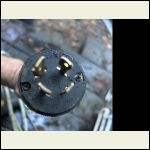
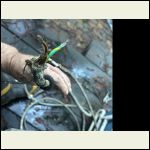
Did just that this afternoon. Surprise, pump plug although a 4 prong connector only had 3 wires in the cable, the white and black 110s and a green to the control box. But the green was connected to the non L shaped spade on the 4 prong, which I believe is the neutral. So the good news is I can screw my long 3 wire cable direct to the control box and my 4 terminal genny connector at the other end. Only weird thing is using that neutral terminal instead of the L (ground) terminal. Hope that works.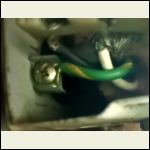
IMG_6237.jpeg
| 
IMG_6238.jpeg
| 
IMG_6239.jpeg
|  |
|
|
travellerw
Member
|
# Posted: 28 Dec 2025 10:59pm
Reply
Thats interesting...
Now technically, ground and neutral are the same circuit as they are bonded at the main panel. However, they are not equal (too technical as to why and a little over my head, but trust me, they are not). You can't interchange a neutral or ground connection (although people do creating a dangerous situation).
Now, its either wired that way because the previous person that did the wiring screwed up.... or well pumps are different. Maybe they don't need a ground wire as the housing of the pump provides a ground connection itself (through the water?)? Not %100 sure.
However, when it comes to a generator, things get even more fuzzy. Many generators have a "floating" ground. They are setup this way so that they don't create a double bond (or double grounds) when hooked up to a properly grounded structure. In laymens terms, this allows a fault (short) to be properly detected and disconnected by a breaker in the breaker panel. With double grounds its possible the breaker will not break the connection as current can find another path.
So unfortunately, none of this really helps your situation as I haven't posted any clear answer.
So a question. Are you "isolating" the pump from the electrical of the cabin? i.e. the generator will not be the only thing that is powering that pump?
|
|
paulz
Member
|
# Posted: 29 Dec 2025 08:51am - Edited by: paulz
Reply
Thanks Trav. Fuzzy is right, I have done my share of research and still unsure.
A few things: the well shack, pump and control box are the only remaining things on the property from the house destroyed in a mud slide in 1967. All I did was put in a genny in the shack to extract water maybe 10 years ago.
From the pump in the well to the control box are 4 wires. From the box to the 220 plug are only 3 wires. It is a 4 prong socket, only the neutral used, not the ground. So it was the green wire going from that box housing to the neutral in the male socket. Non of that my doing.
The new generator at the cabin has the same 4 prong female socket. I tested it yesterday with a VOM, 220 across the two power slots. I do use this genny to power my 110 log splitter and the battery bank charger 110. The beauty of this idea is in addition to not having to go down to the shack to pump water, I can charge the battery bank while filling the water tank, assuming it will do both simultaneously.
Yesterday I ran the cable down the side of the hill most of the way there. It’s big 3 wire cable, garden hose size, 10awg wire looks like. Going to be 300 feet. I’ll take another inside photo of the control box this morning. Have to leave for the city for a day, bit more time to think about it..
|
|
gcrank1
Moderator
|
# Posted: 29 Dec 2025 11:54am - Edited by: gcrank1
Reply
No matter what 'has been working' now is the time to make it compliant to code for your, and others, safety; ie, water and 220v electricity....what could go wrong?.
Btw, in case of an insurance claim IF it isn't wired to code the claim WILL be denied.
|
|
paulz
Member
|
# Posted: 29 Dec 2025 12:12pm - Edited by: paulz
Reply
Arg, just noticed the cabin genny has a toggle switch for 110 or 220 ( says 120/240) so I guess they don’t work at the same time. The 220 socket shows 110 legs so maybe one could tee off while the 220 is going. Not a game changer for me, just can’t charge the bank while filling the tank.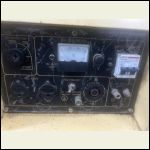
IMG_6246.jpeg
| 
IMG_6215.jpeg
| | |
|
|
travellerw
Member
|
# Posted: 29 Dec 2025 12:46pm
Reply
Quoting: paulz Arg, just noticed the cabin genny has a toggle switch for 110 or 220 ( says 120/240) so I guess they don’t work at the same time. The 220 socket shows 110 legs so maybe one could tee off while the 220 is going. Not a game changer for me, just can’t charge the bank while filling the tank.
All the switch is doing, is shunting the 110v hot over to the 110v plugs. You absolutely could leave it in 220V mode and split off a 110V to run at the same time. Just need to be aware of the amps you are pulling from that leg. Regardless of 110 or 220, amps are amps and you can't go over the ampacity of that leg.
Now I 100% agree with gcrank at this point. Time to make it right! I'm going to post some basic rules/theory so you can makes some choices.
1. In a structure with an electrical panel, the ground and neutral can only be bonded at the MAIN panel. Even with a backup generator, you MUST only have one bonded neutral (sometimes you need to unbond the generator neutral)
2. Many generators are unbonded from factory for "reasons"! If you are doing a permanent or even semi permanent install of a generator, it makes sense to wire a small breaker panel with a ground rod and bonded neutral. (As long as the install is NOT connecting to a structure that already has a panel).
3. Grounds and Neutral needs to be used properly. Don't use a ground as a neutral even though it works (so many houses with smart switches are doing this now). This creates a dangerous situation.
So with that being said, I see that you have 2 options.
Option1, you tie everything back to the electrical panel in the cabin. Make sure that panel has a proper ground and bonding. Use a proper transfer switch to switch between solar and generator. (Some inverters have that switch built in).
Option2, the generator remains isolated from the cabin and just feeds the pump and battery charger. Use a small breaker panel with ground rod and proper bonding. The cabin runs on the inverter all the time, even while charging the batteries/powering the pump.
What you shouldn't do.. Is have one feed coming from the generator and feeding the cabin, while a second feed goes and feeds the pump. This leaves potential for ground loops and an unsafe system (shock hazard, or even fire).
|
|
paulz
Member
|
# Posted: 29 Dec 2025 01:06pm
Reply
Quoting: travellerw What you shouldn't do.. Is have one feed coming from the generator and feeding the cabin, while a second feed goes and feeds the pump. This leaves potential for ground loops and an unsafe system (shock hazard, or even fire).
Yeah that’s true, sharing off my list. The main reason for this exercise, speaking of exercise, is to avoid hiking down to that muddy shack to run that old genny. 10 minutes to fill the well tank and not charge the bank same time is no big deal.
How many old 110 tools you have that don’t even have the 3rd prong, or sockets that don’t even have the 3rd? Doesn’t bother me, but 220 scares me, need to figure out best way.
Only AC at the cabin is the inverter with toaster, nuker and now coffe pot plugged in, all 3 prong. There is no grounding bat pounded in the ground. Al the rest 12dc.
|
|
paulz
Member
|
# Posted: 29 Dec 2025 04:29pm
Reply
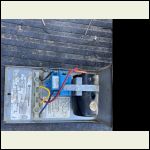
The pump cover. The wired up side goes to the pump. The capacitor and what not slide into the terminals.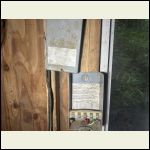
IMG_6250.jpeg
| 
IMG_6251.jpeg
| | |
|
|
gcrank1
Moderator
|
# Posted: 29 Dec 2025 04:31pm - Edited by: gcrank1
Reply
110/120 really should scare you!
Folks die Every Day electrocuted by 'simple' 120vac!
I almost did some years back when I got literally 'locked onto' it......it doesnt just zap you like an electric fence and light up yer eyeballs, it courses back and forth (that alternating current) between you hands and every time goes through your heart trying to kill you!
|
|
paulz
Member
|
# Posted: 29 Dec 2025 04:41pm - Edited by: paulz
Reply
Much online reading on the control box 2801074915. Just started reading..
|
|
Steve_S
Member
|
# Posted: 29 Dec 2025 06:31pm
Reply
Simply put, with 120/240 you don't want to become the ground, it won't end well. I got lucky a couple of times and take few chances now. Even my powerhouse floor is covered with 1/2" rubber horse mat. "Just in case" as there's a crap load of juice in there.
|
|
travellerw
Member
|
# Posted: 29 Dec 2025 08:30pm
Reply
I will just quote this..
"A current of as little as 0.007 amps (7mA) across the heart for three seconds is enough to kill. 0.1 amps (100mA) passing through the body will almost certainly be fatal." regardless if its 20V-60V-120V or 240V.
Anything I have without the 3rd prong is double insulated, it if wasn't I threw it out.
If it was me, I would view this as an opportunity to wire up things correctly. A small breaker panel with proper breakers and grounding rod. Not only does it increase safety, but adds value to the cabin.. PLUS helps with lightening mitigation.
I feel you are a little like me and may not want the expense (yes I'm saying we are cheap). However, this is not a spot to be cheap. I wouldn't care if I hurt myself, but if I hurt someone I care about I wouldn't forgive myself!
|
|
gcrank1
Moderator
|
# Posted: 29 Dec 2025 11:06pm
Reply
A small breaker box like what is used for a hot tub can be used for stuff like this 
|
|
paulz
Member
|
# Posted: 30 Dec 2025 06:42pm
Reply
Success! That’s cabin genny juice running the pump and filling the water tank above the cabin. Man what a lot of work for this geezer. Still a lot of cleanup.
Here’s the well shack, speaking of safety. Wet from creek overflow, mud everywhere, concrete floor. The old well genny is the only thing in there, besides the well. I’ll probably bring it up here for a backup. It’s gas. Tarp on roof from branch breakage. My neighbor kid with my old dozer is going to clean out the creek, roof can wait until summer. Whole shack could probably go away now.
Quoting: gcrank1 small breaker box like what is used for a hot tub can be used for stuff like this
Good idea. Realized that when testing the cabling this morning. Cabin genny puts out 240 not 220. Overseas thing maybe. Anyway I realized when down there with the genny going up top and water pumping there’s no way to kill it other than go back up or pull wires. Need that breaker box with switches.
Thanks for all the advice guys.
IMG_6257.jpeg
| 
IMG_6260.jpeg
| | |
|
|
gcrank1
Moderator
|
# Posted: 30 Dec 2025 10:43pm
Reply
I have a small (old) box with 2 screw in fuses and a throw handle on the side. Are you sure you dont have one in your stash?
|
|
paulz
Member
|
# Posted: 30 Dec 2025 11:46pm
Reply
Yeah I think there’s a box down there, I’ll look tomorrow. Found this in my junk. One of those fancy Goulds pumps. Was hoping it was a 110 and I could give up on the 220 but it’s not. Might have been here when I bought the place 15 years ago, don’t remember picking one up and whatever is in the well works fine.
|
|
travellerw
Member
|
# Posted: 31 Dec 2025 12:57pm
Reply
Quoting: paulz Good idea. Realized that when testing the cabling this morning. Cabin genny puts out 240 not 220. Overseas thing maybe
240V would actually be the standard (at least here in Canada). People say 220 and 110, but really the north american standard is 120V and 240V.
|
|
travellerw
Member
|
# Posted: 31 Dec 2025 01:30pm
Reply
Actually, I thought I would post some stuff that might help others better understand our whole 120-120-240V system. Now, I'm not an electrician or electrical engineer, so I may get stuff technically wrong, however it should be close enough to not matter.
Its a common myth that our system is 120V here in North America. Not true, our system is actually 240V with a center tap on the transformer (what we call neutral). 2 conductors (with 240V potential across) are pulled along with the center tap. Once terminated in the electrical panel, the center tap and ground are bonded together.
So testing between ground or neutral to one hot will give 120V, but between the 2 end wires out of the transformer (the hots) will give 240V. This was done by the power companies in the early days as people already owned 120V appliances. The power companies wanted to go straight 240V as its double the efficiency, but many people would have to throw out expensive appliances. So they compromised with a center tap system.
So 240V is really nothing special. Its wired just like 120V except the neutral is not required since you are essentially using the wires that come from each end of the transformer. However, the ground is ESSENTIAL, as it provides the only path back to the breaker to clear a fault. Without the ground, a fault may not be detected and an over current condition could occur in the wires (possible fire). OR even worse, something could become energized (like a well casing). Then when touched, YOU become the conductor to ground. If the connection is good enough (like wet ground) and its across your heart, then death is highly likely!
Here is a video that may explain it a little better than me.
https://www.youtube.com/watch?v=xMZkKI5rleg&t=18s
|
|
paulz
Member
|
# Posted: 31 Dec 2025 01:56pm
Reply
Thanks Trav. A bit more on mine: with my 3 wire run (ended up about 300’) I used just the ground at the genny 4 prong plug, leaving the neutral prong open, both because the control box has one to box casing (again only 3 wire terminals out to the juice) and from warnings about getting zapped. I have no idea what that 4th prong in the genny is hooked to, other than needing it for 120.
And from the control box to the pump in the well is 4 wire, so I guess there’s some neutral going on there.
Anyway it’s working. Now that’s done, think I’ll go charm some rattlesnakes.
|
|
paulz
Member
|
# Posted: 2 Jan 2026 09:44am
Reply
Looking at the Goulds 220 pump I see it says single phase. Just when I was staring to get a grip on this 220 stuff, I see they have 3 phase. What is that, do we have them in our homes or is an industrial thing?
|
|
travellerw
Member
|
# Posted: 2 Jan 2026 01:04pm - Edited by: travellerw
Reply
Quoting: paulz Just when I was staring to get a grip on this 220 stuff, I see they have 3 phase. What is that, do we have them in our homes or is an industrial thing?
3 phase is an industrial thing. Its pretty rare that you would have a need to hook a 3 phase motor in a home setting. The only time I have seen it is for something like a lathe, milling machine or big bejesus compressor. It can be done, but requires a Variable Frequency Drive (VFD).
Nothing to worry about for you. Just make sure you buy single phase stuff when purchasing motors, pumps, compressors, ect ect!
|
|
paulz
Member
|
# Posted: 7 Jan 2026 03:09pm
Reply
Thanks Trav. That’s pretty much what I gathered from reading. Split phase, single phase, three phase… the AC learning goes on.
Quoting: gcrank1 have a small (old) box with 2 screw in fuses and a throw handle on the side. Are you sure you dont have one in your stash
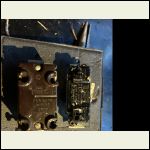
Didn’t find any fuse boxes in my pile but I did find this. The switch with for poles looks like I could wire up down at the shop, where the well control box will be, to shut off the pump if need be while the genny is going at the cabin.
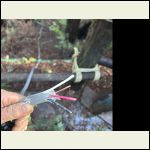
I bought 250’ feet of outdoor cord to replace the extension cords from my testing. It says it’s 10/3 but has 4 wires including the bare one. The control box is only 3 wires, no neutral guess I’ll use the bare one for the ground terminal on the box.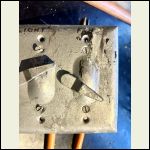
IMG_6297.jpeg
| 
IMG_6298.jpeg
| 
IMG_6300.jpeg
| |
|
|
| << . 1 . 2 . 3 . >> |

